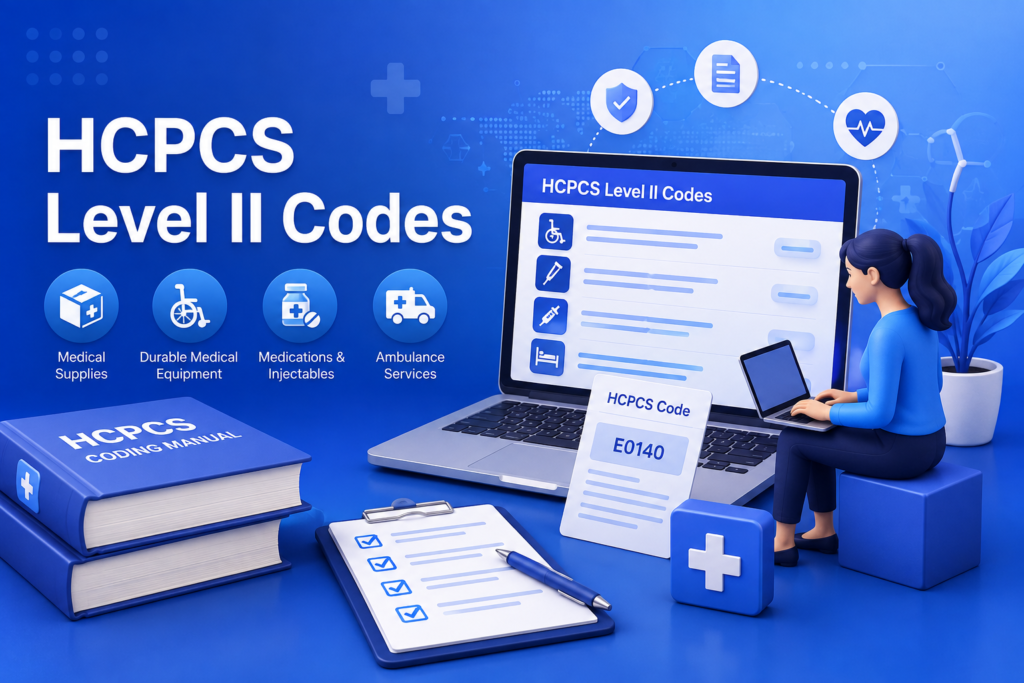
What Are HCPCS Level II Codes?
HCPCS Level II codes are standardized alphanumeric codes used to report healthcare products, supplies, equipment, medications, and services that are not included in the CPT® code set. They are maintained by the Centers for Medicare & Medicaid Services (CMS) and are recognized by Medicare, Medicaid, and many private insurance companies for claim submission and reimbursement.
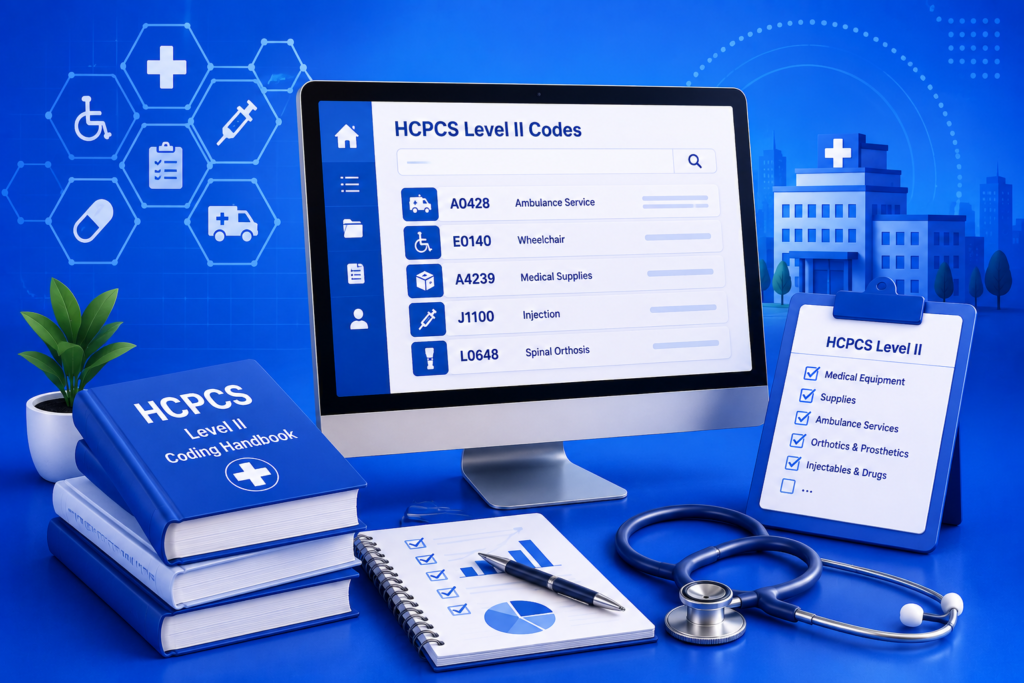
Goals of HCPCS Level II Codes
HCPCS Level II provides a standardized method for reporting healthcare products, supplies, equipment, and services that cannot be described using CPT® procedure codes.
Report Non-Physician Services
Provide standardized codes for healthcare services that are not represented by CPT® codes.
Standardize Medical Supplies and Equipment
Create a consistent coding system for durable medical equipment (DME), prosthetics, orthotics, medical supplies, and other healthcare products.
Support Accurate Claim Submission
Ensure products and services are reported consistently on medical claims submitted to insurance companies.
Improve Insurance Reimbursement
Help insurance companies correctly identify billable products and services, allowing accurate payment and claim processing.
Support Medicare and Other Payer Programs
Provide standardized reporting that supports Medicare, Medicaid, and commercial insurance reimbursement while improving healthcare data collection and administration.
How HCPCS Level II Codes Work
HCPCS Level II coding begins when a healthcare provider prescribes or supplies a product, medication, medical device, or service that is not described by a CPT® code. The provider documents the item or service in the patient’s medical record, and a medical coder or biller assigns the appropriate HCPCS Level II code. The HCPCS code is then reported on the medical claim along with the appropriate ICD-10-CM diagnosis code and CPT® code (when applicable). The insurance company reviews the claim, verifies coverage, and determines reimbursement.
Patient Visits Healthcare Provider
↓
Provider Evaluates Patient
↓
Provider Orders or Provides Product/Service
↓
Provider Documents the Service
↓
Medical Coder Reviews Documentation
↓
Assign HCPCS Level II Code
↓
Assign ICD-10-CM Diagnosis Code
↓
Submit Medical Claim
↓
Insurance Reviews Claim
↓
Claim Closed
Common HCPCS Level II Code Categories
HCPCS Level II codes are organized into categories based on the type of healthcare product, supply, equipment, medication, or service being reported.
Medical and Surgical Supplies (A Codes)
Used to report medical supplies, surgical dressings, transportation services, and other healthcare products.
Durable Medical Equipment (E Codes)
Used to report durable medical equipment (DME) provided for home or long-term medical use.
Drugs and Biologicals (J Codes)
Used for injectable medications, chemotherapy drugs, vaccines, biologics, and infusion medications that are billed separately.
Orthotics and Prosthetics (L Codes)
Used to report prosthetic limbs, orthopedic braces, spinal supports, shoe inserts, and other orthotic devices.
Temporary National Codes (G and Q Codes)
Used primarily by Medicare and other payers for services, procedures, or supplies that do not yet have permanent CPT® or HCPCS codes.
Dental, Vision, Hearing, and Other Services
HCPCS Level II also includes codes for hearing aids, vision-related supplies, certain dental services, ambulance transportation, and many other specialized healthcare products and services.
Essential HCPCS Level II Terms
| Term | Simple Definition |
|---|---|
| HCPCS Level II | National alphanumeric codes used to report products, supplies, equipment, and services not described by CPT®. |
| Alphanumeric Code | A code consisting of one letter followed by four numbers. |
| CMS | The Centers for Medicare & Medicaid Services, which maintains HCPCS Level II codes. |
| Durable Medical Equipment (DME) | Reusable medical equipment used for patient care, such as wheelchairs and walkers. |
| Medical Supply | Disposable healthcare products such as dressings, gloves, catheters, and wound care items. |
| Biologicals | Complex medications derived from living organisms, often reported using HCPCS Level II codes. |
| Ambulance Service | Medically necessary patient transportation reported using HCPCS Level II codes. |
| Orthotics | Devices that support or correct musculoskeletal conditions, such as braces and shoe inserts. |
| Prosthetics | Artificial devices that replace missing body parts, such as artificial limbs. |
| Temporary National Codes | Temporary HCPCS codes assigned until permanent coding becomes available. |
HCPCS Level II Coding Process
Understanding the HCPCS Level II coding process helps medical coders and billing professionals accurately report healthcare products, supplies, equipment, and services while ensuring proper reimbursement.
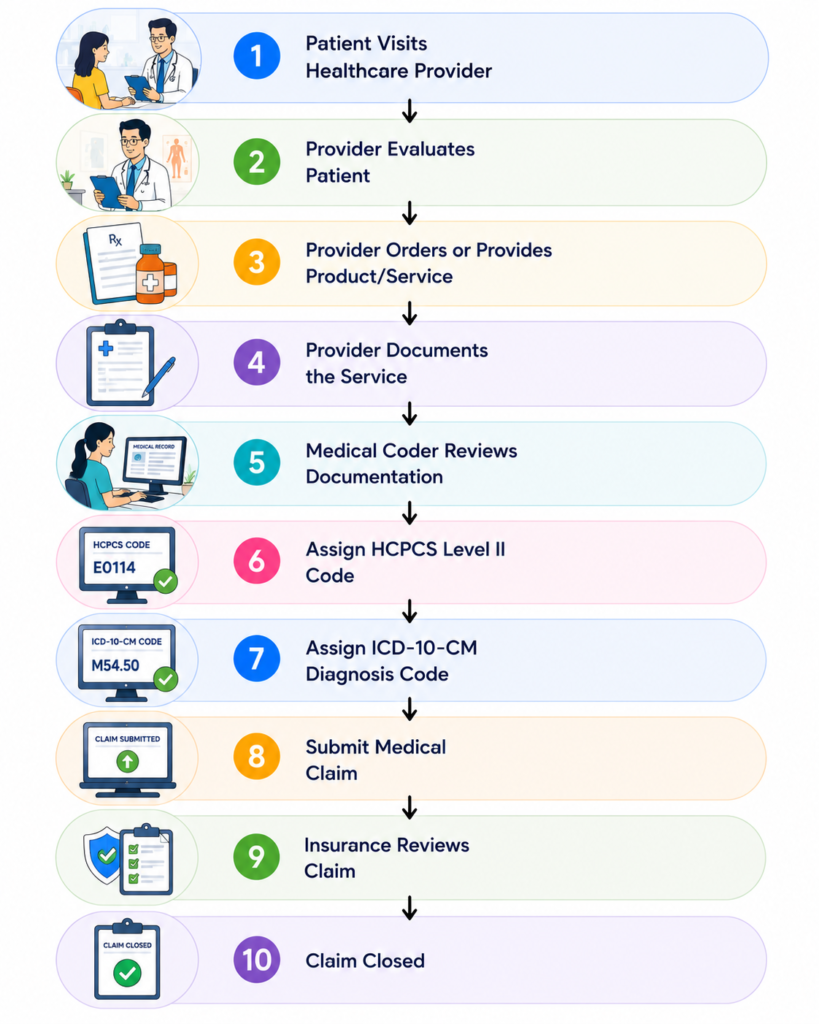
Patient Journey and HCPCS Level II Codes
Many patient visits require more than a physician’s procedure. Patients may also receive medical supplies, injectable medications, durable medical equipment (DME), prosthetics, orthotics, or ambulance transportation. These products and services are reported using HCPCS Level II codes. After the healthcare provider documents the item or service provided, a medical coder assigns the appropriate HCPCS Level II code along with the related ICD-10-CM diagnosis code (and CPT® code, when applicable). The completed claim is then submitted to the insurance company for review and reimbursement.
1. Patient Visits Healthcare Provider
2. Provider Evaluates the Patient
3.Provider Orders or Provides a Product or Service
4. Provider Documents the Service
5. Medical Coder Reviews the Medical Record
6. HCPCS Level II Code is Assigned
7. ICD-10-CM Diagnosis Code is Assigned
8. Medical Claim is Submitted to Insurance
9. Insurance Reviews the Claim
10. Claim is Closed
Keep Learning
Congratulations! You now understand the fundamentals of HCPCS Level II Codes, including their structure, categories, coding process, and role in medical billing. HCPCS Level II codes play a critical role in reporting products, supplies, equipment, medications, and services that are not covered by CPT® codes, helping ensure accurate claim submission and proper reimbursement.
In the next module, you’ll learn about CPT® Modifiers, including how modifiers provide additional information about procedures and services, improve coding accuracy, and help prevent claim denials.
Questions, answered
Have questions about the US healthcare system? Find clear, beginner-friendly answers to some of the most common questions to strengthen your understanding before moving on to the next module.
What does HCPCS stand for?
HCPCS stands for Healthcare Common Procedure Coding System. It is a national coding system used to report healthcare products, supplies, equipment, medications, and services that are not described by CPT® codes.
Who maintains HCPCS Level II codes?
HCPCS Level II codes are maintained by the Centers for Medicare & Medicaid Services (CMS). CMS updates the code set regularly to reflect changes in healthcare services, products, and reimbursement requirements.
What is the difference between CPT® and HCPCS Level II?
CPT® codes report physician services and medical procedures, while HCPCS Level II codes report medical supplies, durable medical equipment (DME), injectable drugs, ambulance services, prosthetics, orthotics, and other products or services not included in CPT®.
What is the format of a HCPCS Level II code?
A HCPCS Level II code consists of one alphabetical letter followed by four numeric digits, such as E0114, J1100, or A0428.
When are HCPCS Level II codes used?
HCPCS Level II codes are used whenever a healthcare provider bills for products, supplies, medications, equipment, transportation services, or other healthcare services that are not described by CPT® codes.