
What Is Insurance Verification?
Insurance verification is the process of confirming that a patient’s health insurance coverage is active and verifying eligibility, benefits, network status, prior authorization requirements, and patient financial responsibility before healthcare services are provided.
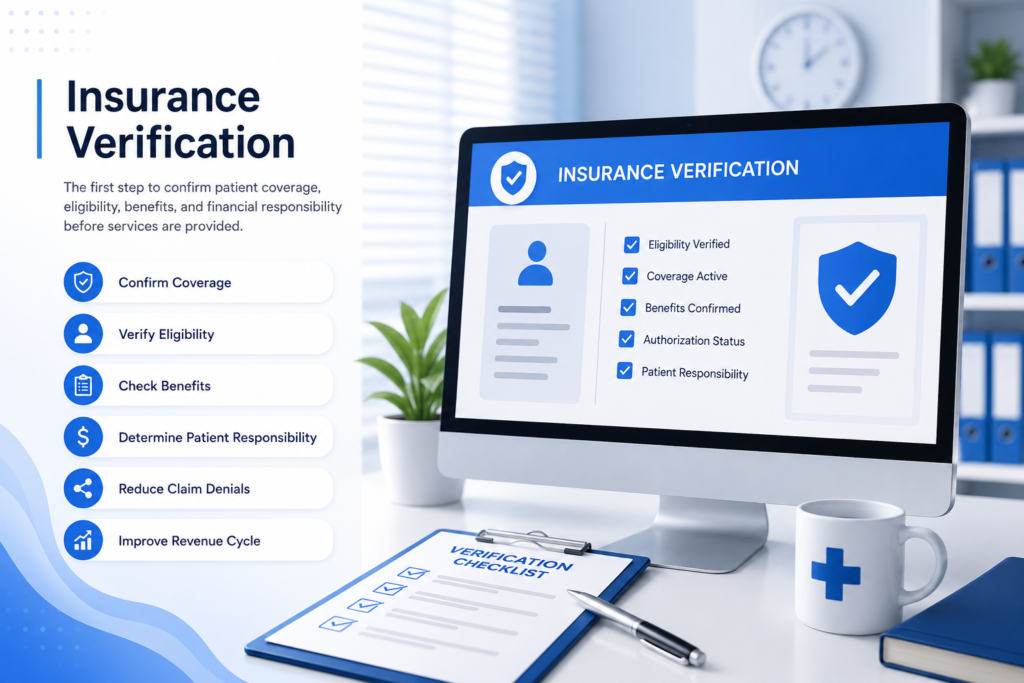
Goals of Insurance Verification
Insurance verification ensures that both the patient and the healthcare provider understand insurance coverage before medical services are provided. This helps reduce billing issues, improve claim accuracy, and ensure smoother reimbursement.
Confirm Active Coverage
Verify that the patient’s insurance policy is active on the date of service.
Verify Patient Eligibility
Confirm that the patient is eligible to receive benefits under the insurance plan.
Determine Coverage Benefits
Identify which medical services are covered, excluded, or subject to plan limitations.treatment
Identify Patient Financial Responsibility
Determine the patient’s copayment, deductible, coinsurance, and estimated out-of-pocket costs before treatment.
Prevent Claim Denials
Identify issues such as inactive coverage, referral requirements, or missing prior authorization before services are provided.
How Insurance Verification Works
Insurance verification is performed before the patient receives healthcare services. The healthcare provider confirms the patient’s insurance coverage, eligibility, benefits, network status, prior authorization requirements, and financial responsibility to ensure services can be billed correctly and reimbursed without unnecessary delays.
Patient Schedules an Appointment
↓
Collect Patient & Insurance Information
↓
Review Insurance Card
↓
Verify Active Insurance Coverage
↓
Check Eligibility & Benefits
↓
Verify Copay, Deductible & Coinsurance
↓
Check Prior Authorization Requirements
↓
Verify Referral & Network Status
↓
Inform Patient of Financial Responsibility
↓
Patient Receives Medical Services
Information Verified During Insurance Verification
During insurance verification, healthcare providers review several details to ensure the patient is eligible for services and that claims can be submitted accurately.
Active Insurance Coverage
Confirm that the patient’s insurance policy is active on the scheduled date of service.
Patient Eligibility
Verify that the patient is eligible to receive healthcare benefits under the insurance plan.
Covered Services
Determine whether the planned medical services are covered under the patient’s insurance policy.
Patient Financial Responsibility
Verify copayment, deductible, coinsurance, and estimated out-of-pocket costs.
Prior Authorization Requirements
Determine whether authorization is required before performing certain services, procedures, tests, or medications.
Referral Requirements
Verify whether a referral from the Primary Care Provider (PCP) is required before specialist services.
Provider Network Status
Confirm whether the healthcare provider is in-network or out-of-network for the patient’s insurance plan.
Plan Limitations
Review visit limits, benefit exclusions, waiting periods, and any coverage restrictions that may affect reimbursement.
Essential Insurance Verification Terms
| Term | Simple Definition |
|---|---|
| Eligibility Verification | Confirms that the patient’s insurance coverage is active and valid. |
| Benefits Verification | Reviews the services covered under the insurance plan. |
| Copayment (Copay) | A fixed amount the patient pays for a covered healthcare service. |
| Deductible | The amount the patient pays before insurance begins paying for covered services. |
| Coinsurance | The percentage of healthcare costs shared by the patient after the deductible is met. |
| Prior Authorization (PA) | Approval required before certain medical services or medications are covered. |
| Referral | Authorization from a Primary Care Provider (PCP) for specialty care. |
| In-Network Provider | A provider contracted with the insurance company. |
| Out-of-Network Provider | A provider without a contract with the insurance company. |
| Coordination of Benefits (COB) | Determines the payment order when a patient has more than one insurance plan. |
Insurance Verification Process
Understanding the insurance verification process helps medical billing professionals identify potential coverage issues before treatment, reducing claim denials and improving reimbursement.
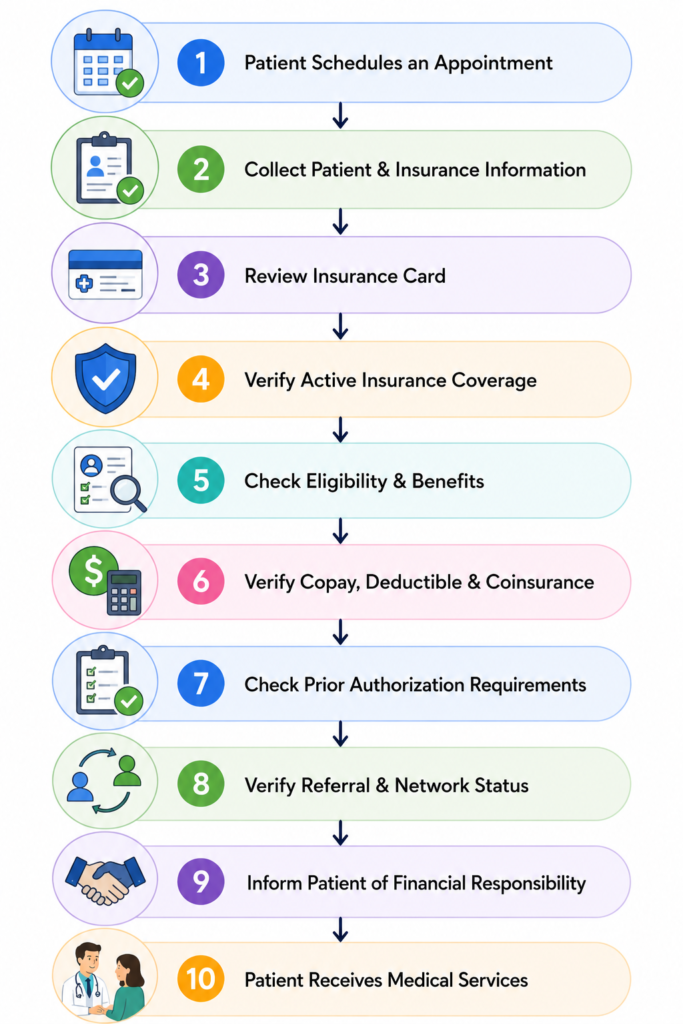
Patient Journey During Insurance Verification
Before receiving medical services, every patient goes through an insurance verification process. During this journey, the healthcare provider confirms insurance coverage, eligibility, benefits, prior authorization requirements, and patient financial responsibility. This helps prevent claim denials and ensures a smoother billing process.
1. Schedule an Appointment
2.Provide Insurance Information
3. Insurance Card is Reviewed
4. Active Insurance Coverage is Verified
5. Eligibility and Benefits are Confirmed
6. Copay, Deductible, and Coinsurance are Verified
7. Prior Authorization Requirements are Checked
8. Referral and Network Status are Verified
9. Patient Financial Responsibility is Explained
10. Patient Receives Medical Services
Keep Learning
Congratulations! You now understand the Insurance Verification process and its importance in the healthcare revenue cycle. Accurate insurance verification helps reduce claim denials, improve billing accuracy, and ensure timely reimbursement by confirming coverage before services are provided. In the next module, you’ll learn about Prior Authorization, including when authorization is required, how to obtain approval, common authorization workflows, and how prior authorization impacts medical billing and reimbursement.
Questions, answered
Have questions about the US healthcare system? Find clear, beginner-friendly answers to some of the most common questions to strengthen your understanding before moving on to the next module.
What is insurance verification?
Insurance verification is the process of confirming a patient’s active insurance coverage, eligibility, benefits, network status, prior authorization requirements, and financial responsibility before healthcare services are provided.
Why is insurance verification important?
It helps prevent claim denials, reduces billing errors, identifies patient financial responsibility, and ensures claims are submitted accurately for timely reimbursement.
What information is verified during insurance verification?
Healthcare providers verify active coverage, eligibility, covered benefits, copayments, deductibles, coinsurance, prior authorization requirements, referral requirements, and provider network status.
Who performs insurance verification?
Insurance verification is typically performed by insurance verification specialists, patient access representatives, front desk staff, medical billers, or prior authorization teams before the patient’s appointment.
What happens if insurance verification is not completed?
Failure to verify insurance may result in inactive coverage, uncovered services, missing prior authorizations, claim denials, payment delays, increased patient balances, and additional administrative work.