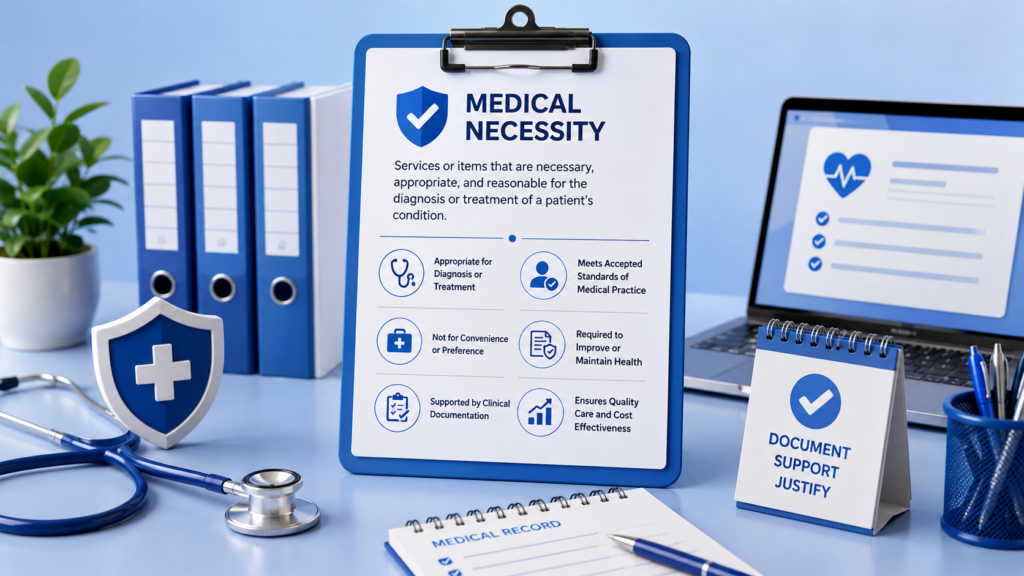
What Is Medical Necessity?
Medical necessity refers to healthcare services, procedures, tests, medications, or medical equipment that are reasonable, appropriate, and required to diagnose, treat, or manage a patient’s medical condition based on accepted medical standards and the patient’s health needs.

Goals of Medical Necessity
Medical necessity ensures that healthcare services provided to patients are clinically appropriate, supported by documentation, and eligible for insurance coverage.
Ensure Appropriate Patient Care
Confirm that the requested healthcare service is necessary to diagnose, treat, or manage the patient’s medical condition.
Support Insurance Coverage
Provide sufficient clinical evidence to demonstrate that the service meets the insurance company’s medical necessity requirements.
Prevent Claim Denials
Reduce denials by ensuring documentation and coding accurately support the medical necessity of the service.
Improve Reimbursement
Help insurance companies process and reimburse medically necessary services accurately and efficiently.
Maintain Compliance
Ensure healthcare providers follow payer policies, clinical guidelines, and documentation standards.
How Medical Necessity Works
Coverage is evaluated before or after healthcare services are provided, depending on the insurance plan and the type of service. The healthcare provider documents the patient’s condition, assigns the appropriate diagnosis and procedure codes, and submits the claim. The insurance company reviews the documentation and determines whether the service meets its medical necessity guidelines for coverage and reimbursement.
Patient Receives Medical Evaluation
↓
Provider Documents Symptoms & Diagnosis
↓
Determine Appropriate Treatment or Service
↓
Assign ICD-10-CM & CPT®/HCPCS Codes
↓
Submit Claim or Prior Authorization Request
↓
Insurance Reviews Clinical Documentation & Coverage Criteria
↓
Coverage Approved or Denied
↓
Medical Service Reimbursed (If Approved)
↓
Patient Financial Responsibility Determined
↓
Claim Closed
Information Used to Determine Medical Necessity
Insurance companies review several clinical and billing factors to determine whether a healthcare service is medically necessary and eligible for coverage.
Patient Symptoms
The signs and symptoms reported by the patient that support the need for evaluation or treatment.
Diagnosis Information
ICD-10-CM diagnosis codes and clinical findings that explain the patient’s medical condition.
Clinical Documentation
Provider notes, history, physical examination findings, treatment plans, laboratory results, imaging reports, and other supporting medical records.
Requested Service
The CPT®/HCPCS-coded procedure, diagnostic test, medication, therapy, or medical equipment requested for the patient.
Medical Necessity Guidelines
Insurance company coverage policies, Local Coverage Determinations (LCDs), National Coverage Determinations (NCDs), and evidence-based clinical guidelines.
Previous Treatments
Documentation showing conservative treatment, prior therapies, medications, or procedures attempted before requesting advanced care when required.
Supporting Documentation
Additional records, referrals, prior authorization approvals, operative reports, or other documents requested by the insurance company.
Essential Medical Necessity Terms
| Term | Simple Definition |
|---|---|
| Medical Necessity | Healthcare services that are reasonable and necessary to diagnose or treat a patient’s condition. |
| Clinical Documentation | Medical records supporting the need for the requested service. |
| ICD-10-CM Code | Diagnosis code that justifies why a service is medically necessary. |
| CPT®/HCPCS Code | Procedure code describing the service performed or requested. |
| Local Coverage Determination (LCD) | Medicare contractor policy describing when specific services are covered. |
| National Coverage Determination (NCD) | CMS policy explaining nationwide Medicare coverage for certain services. |
| Coverage Policy | Insurance company guidelines used to determine whether a service is covered. |
| Medical Review | Insurance evaluation of documentation to determine coverage eligibility. |
| Claim Denial | Rejection of payment because coverage requirements, including medical necessity, were not met. |
| Appeal | A request to the insurance company to reconsider a denied claim by submitting additional supporting information. |
Medical Necessity Process
Understanding the process helps medical billing professionals ensure that clinical documentation supports diagnosis and treatment, reducing denials and improving reimbursement.
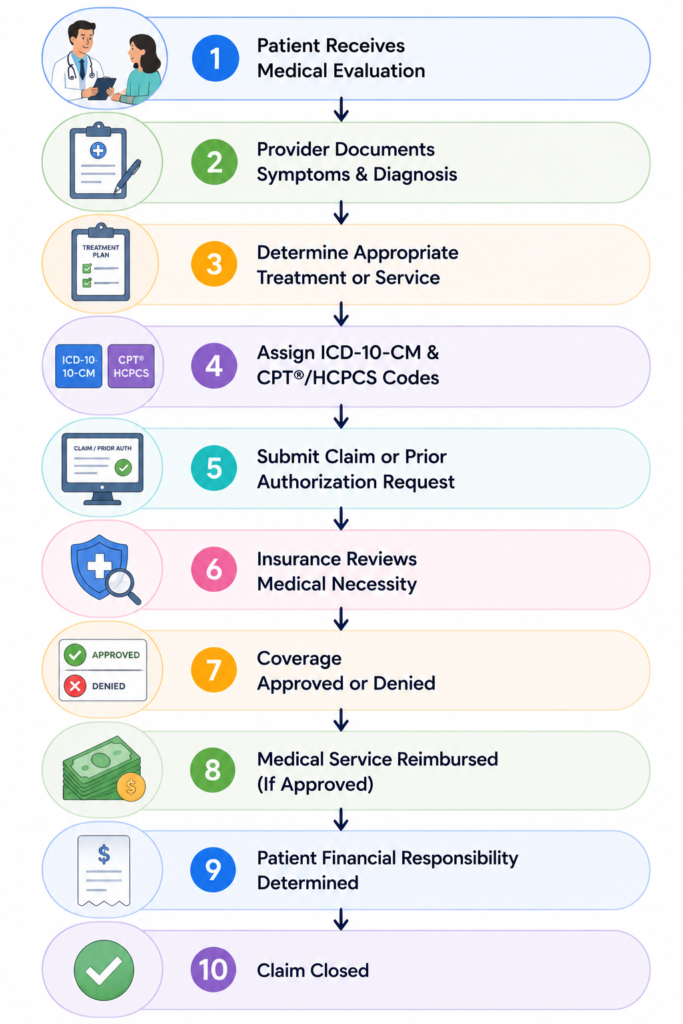
Patient Journey and Medical Necessity
Every patient receives healthcare services based on their medical condition. Throughout the treatment process, healthcare providers document clinical findings and demonstrate why a service is medically necessary. Insurance companies review this information before deciding whether to cover and reimburse the service.
1. Patient Receives Medical Evaluation
2. Provider Documents Symptoms and Diagnosis
3. Appropriate Treatment or Service is Selected
4. Diagnosis and Procedure Codes are Assigned
5. Claim or Prior Authorization is Submitted
6. Insurance Reviews Medical Necessity
7. Coverage is Approved or Denied
8. Medical Service is Reimbursed (If Approved)
9. Patient Financial Responsibility is Determined
10. Claim is Closed
Keep Learning
Congratulations! You now understand the concept of Medical Necessity and its importance in healthcare reimbursement. Proper documentation and accurate diagnosis coding help demonstrate why healthcare services are necessary, reducing denials and supporting successful claim payment. In the next module, you’ll learn about Medical Coding, including ICD-10-CM, CPT®, and HCPCS Level II codes, coding guidelines, documentation requirements, and how accurate coding supports successful medical billing and reimbursement.
Questions, answered
Have questions about the US healthcare system? Find clear, beginner-friendly answers to some of the most common questions to strengthen your understanding before moving on to the next module.
What is medical necessity?
Medical necessity refers to healthcare services that are reasonable, appropriate, and required to diagnose, treat, or manage a patient’s medical condition according to accepted medical standards.
Why is medical necessity important?
Medical necessity helps insurance companies determine whether a healthcare service qualifies for coverage and reimbursement. It also reduces claim denials and supports accurate billing.
Who determines medical necessity?
The treating healthcare provider documents the patient’s condition and recommends treatment, while the insurance company reviews the documentation and applies its coverage policies and clinical guidelines to determine whether the service meets medical necessity requirements.
What documents support medical necessity?
Provider notes, medical history, physical examination findings, laboratory results, imaging reports, ICD-10-CM diagnosis codes, treatment plans, and other clinical documentation help support medical necessity.
Can a claim be denied for lack of medical necessity?
Yes. Even if a service is correctly coded or has prior authorization, the insurance company may deny the claim if the documentation does not demonstrate that the service was medically necessary under the payer’s coverage policy.