
What Is Prior Authorization?
Prior authorization (PA) is the process of obtaining approval from a health insurance company before certain medical services, procedures, medications, diagnostic tests, or medical equipment are provided. Insurance companies use prior authorization to determine whether the requested service is medically necessary and eligible for coverage under the patient’s health plan.

Goals of Prior Authorization
Prior authorization ensures that services requiring advance approval meet the insurance company’s coverage policies before they are performed. This protects both the healthcare provider and the patient from avoidable claim denials and unexpected expenses.
Confirm Medical Necessity
Ensure the requested service meets the insurance company’s medical necessity criteria.
Obtain Insurance Approval
Receive approval from the payer before performing services that require authorization.
Prevent Claim Denials
Identify authorization requirements before treatment to reduce avoidable denials.
Improve Reimbursement
Ensure approved services can be billed correctly for timely payment.
Inform Patients Before Treatment
Help patients understand approval status and potential financial responsibility before receiving care.
How Prior Authorization Works
Prior authorization is completed before certain medical services are provided. The healthcare provider determines whether authorization is required, submits the necessary clinical information to the insurance company, and waits for the payer’s decision before scheduling or performing the service.
Patient Schedules an Appointment
↓
Verify Insurance Eligibility
↓
Determine if Prior Authorization is Required
↓
Gather Clinical Documentation
↓
Submit Prior Authorization Request
↓
Insurance Company Reviews the Request
↓
Authorization Approved, Denied, or Pended
↓
Communicate Decision to Provider & Patient
↓
Schedule or Perform Medical Service
↓
Submit Medical Claim with Authorization Details
Information Required for Prior Authorization
To obtain prior authorization, healthcare providers must submit accurate patient, insurance, and clinical information requested by the insurance company.
Patient Information
Patient name, date of birth, member ID, and other identifying information.
Insurance Information
Insurance company name, policy details, group number, and payer-specific requirements.
Provider Information
Rendering provider, referring provider (if applicable), National Provider Identifier (NPI), and facility information.
Diagnosis Information
ICD-10-CM diagnosis codes and clinical documentation supporting the patient’s condition.
Procedure or Service Information
Requested CPT®/HCPCS codes, procedure description, quantity, frequency, and expected date of service.
Medical Necessity Documentation
Physician notes, treatment history, laboratory results, imaging reports, and other records demonstrating why the requested service is medically necessary.
Supporting Documents
Any additional forms, medical records, referrals, or payer-specific documentation required to process the request.
Essential Prior Authorization Terms
| Term | Simple Definition |
|---|---|
| Prior Authorization (PA) | Approval required from the insurance company before certain services are provided. |
| Medical Necessity | Evidence that a service is appropriate and needed for the patient’s condition. |
| Authorization Number | A unique approval number assigned by the insurance company. |
| Pending Status | The authorization request is still under review. |
| Approved Authorization | The insurance company has authorized the requested service. |
| Denied Authorization | The insurance company has not approved the requested service. |
| Clinical Documentation | Medical records supporting the authorization request. |
| ICD-10-CM Code | Diagnosis code submitted to justify medical necessity. |
| CPT®/HCPCS Code | Procedure code submitted for authorization. |
| Referral | Approval from a Primary Care Provider (PCP) when required before specialty services. |
Prior Authorization Process
Understanding the prior authorization process helps medical billing professionals reduce authorization-related denials, ensure compliance with payer requirements, and support timely reimbursement.
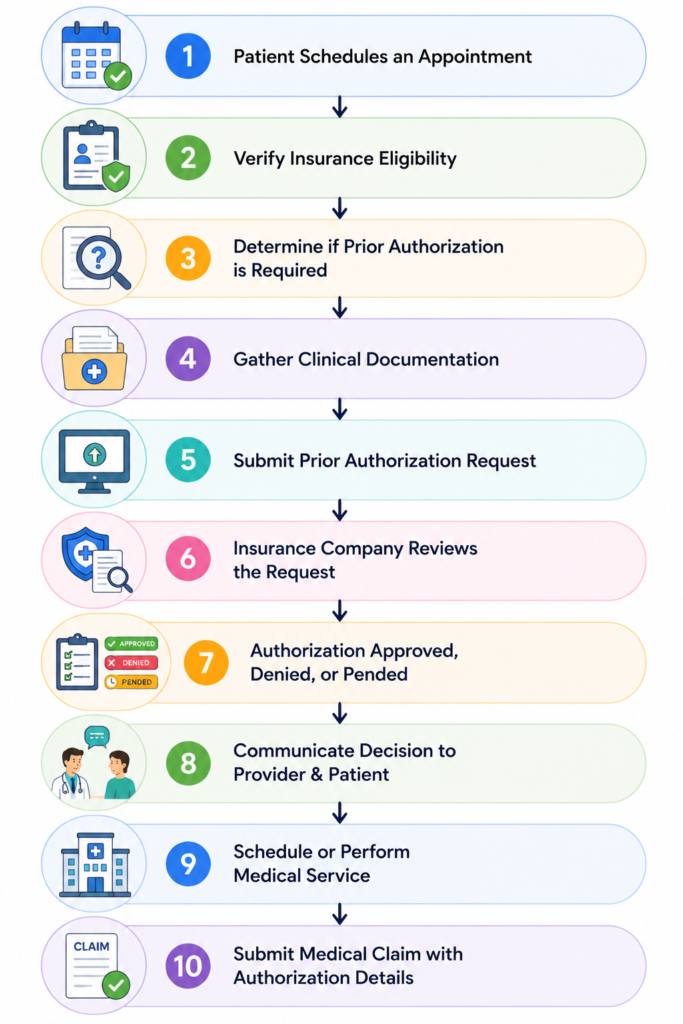
Patient Journey During Prior Authorization
Before certain medical services are performed, patients may need prior authorization from their insurance company. During this process, the healthcare provider submits the required clinical information to the payer, waits for a decision, and schedules treatment only after approval when required.
1. Schedule an Appointment
2. Insurance Eligibility is Verified
3. Determine if Prior Authorization is Required
4. Clinical Documentation is Collected
5. Authorization Request is Submitted
6. Insurance Company Reviews the Request
7. Authorization is Approved, Denied, or Pended
8. Patient and Provider are Notified
9. Medical Service is Scheduled or Performed
10. Medical Claim is Submitted with Authorization Details
Keep Learning
Congratulations! You now understand the Prior Authorization process and its role in the healthcare revenue cycle. Obtaining authorization before treatment helps ensure medical necessity, supports payer compliance, prevents claim denials, and improves reimbursement. In the next module, you’ll learn about Medical Coding, where you’ll explore ICD-10-CM, CPT®, and HCPCS Level II codes, coding guidelines, documentation requirements, and how accurate coding supports successful medical billing.
Questions, answered
Have questions about the US healthcare system? Find clear, beginner-friendly answers to some of the most common questions to strengthen your understanding before moving on to the next module.
What is prior authorization?
Prior authorization is the process of obtaining approval from a health insurance company before certain medical services, procedures, medications, diagnostic tests, or medical equipment are provided.
Why is prior authorization important?
It helps confirm medical necessity, ensures payer requirements are met, prevents claim denials, reduces payment delays, and improves reimbursement.
Which services commonly require prior authorization?
Prior authorization is commonly required for advanced imaging (MRI, CT, PET scans), elective surgeries, specialty medications, durable medical equipment (DME), physical therapy, and certain outpatient procedures. Requirements vary by insurance plan.
Who performs prior authorization?
Prior authorization is typically handled by prior authorization specialists, patient access teams, medical billers, nurses, or provider office staff, depending on the healthcare organization.
What happens if prior authorization is not obtained?
If a required prior authorization is missing or invalid, the insurance company may deny the claim, delay payment, or hold the patient financially responsible for the service.