
What Is a Referral?
A referral is a written or electronic authorization from a Primary Care Provider (PCP) that allows a patient to receive medical services from a specialist, hospital, or another healthcare provider when required by the patient’s health insurance plan.

Goals of Referrals
The referral process ensures that patients receive the appropriate level of care while meeting the requirements of their health insurance plan. It also helps providers coordinate treatment and reduce billing issues.
Coordinate Patient Care
Ensure patients are referred to the appropriate specialist or healthcare provider based on their medical needs.
Meet Insurance Requirements
Obtain the required referral before specialist services are provided when mandated by the insurance plan.
Prevent Claim Denials
Verify referral requirements before treatment to reduce avoidable claim denials.
Improve Reimbursement
Ensure referral information is accurate so claims can be processed and paid correctly.
Support Continuity of Care
Promote coordinated communication between the Primary Care Provider (PCP), specialists, and other healthcare providers.
How Referrals Work
The referral process begins when a Primary Care Provider (PCP) determines that a patient needs specialized medical care. If the patient’s insurance plan requires a referral, the PCP issues one before the patient visits the specialist. The referral is verified, documented, and used to support claim submission and reimbursement.
Patient Schedules an Appointment with PCP
↓
PCP Evaluates the Patient
↓
Determine if Specialist Care is Needed
↓
Check if Referral is Required
↓
PCP Issues Referral
↓
Verify Referral & Insurance Requirements
↓
Schedule Specialist Appointment
↓
Patient Receives Specialist Care
↓
Medical Claim Submitted with Referral Information
↓
Insurance Processes the Claim
Information Required for Referrals
To ensure specialist services are covered, healthcare providers must collect and verify important referral information before the patient receives care.
Patient Information
Patient name, date of birth, member ID, and other identifying information.
Insurance Information
Insurance company, health plan, policy details, and referral requirements.
Referring Provider Information
Primary Care Provider (PCP) name, National Provider Identifier (NPI), and practice details.
Specialist Information
Name, specialty, NPI, and facility where the patient will receive services.
Diagnosis Information
ICD-10-CM diagnosis code or clinical reason supporting the referral.
Referral Details
Referral number (if applicable), approved specialty, visit limits, effective date, and expiration date.
Supporting Documentation
Clinical notes, test results, imaging reports, or other documentation supporting the need for specialty care.
Essential Referral Terms
| Term | Simple Definition |
|---|---|
| Referral | Authorization from a PCP allowing a patient to receive specialist care. |
| Primary Care Provider (PCP) | The physician responsible for managing a patient’s overall healthcare. |
| Specialist | A provider with advanced training in a specific area of medicine. |
| Referral Number | A unique number assigned to the referral request, when applicable. |
| Referral Authorization | Approval allowing specialist services under the insurance plan. |
| Referral Expiration Date | The last date the referral remains valid. |
| Visit Limit | The maximum number of specialist visits approved under the referral. |
| Managed Care Plan | A health plan, such as an HMO, that may require referrals for specialty care. |
| In-Network Specialist | A specialist contracted with the patient’s insurance plan. |
| Out-of-Network Specialist | A specialist who is not contracted with the patient’s insurance plan. |
Referral Process
Understanding the referral process helps medical billing professionals verify insurance requirements, prevent referral-related claim denials, and ensure accurate reimbursement.
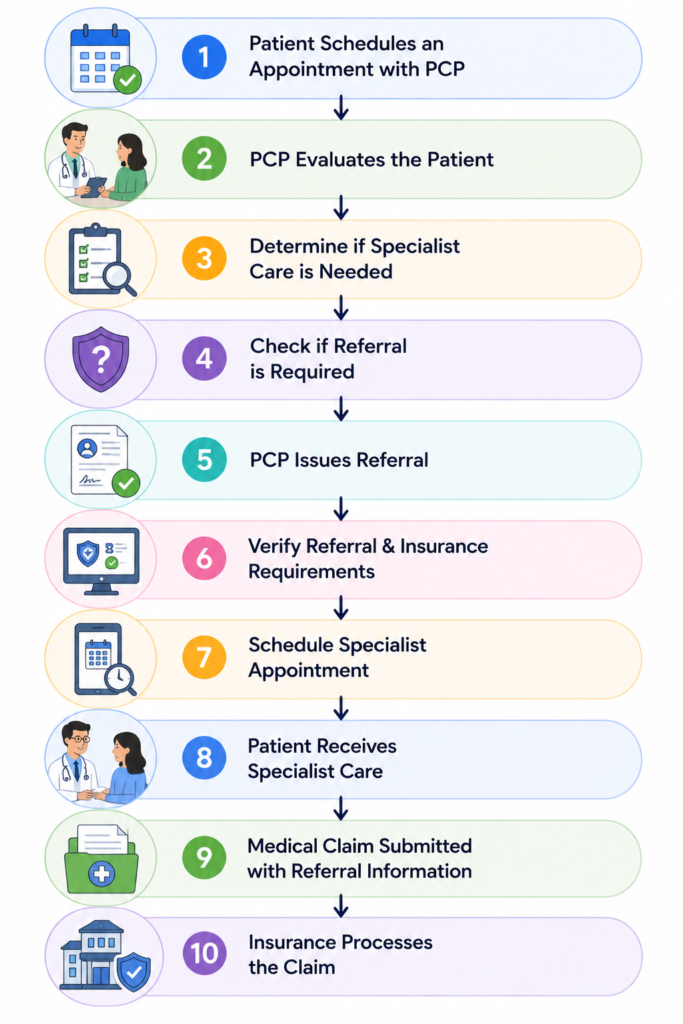
Patient Journey During the Referral Process
Patients enrolled in health plans that require referrals must obtain approval from their Primary Care Provider (PCP) before visiting a specialist. Following the referral process ensures the specialist visit is covered under the patient’s insurance plan and helps prevent claim denials.
1. Schedule an Appointment with the Primary Care Provider (PCP)
2. PCP Evaluates the Patient
3. Determine Whether Specialist Care is Needed
4. Check if a Referral is Required
5. PCP Issues the Referral
6. Referral and Insurance Requirements are Verified
7. Specialist Appointment is Scheduled
8. Patient Receives Specialist Care
9.Medical Claim is Submitted with Referral Information
10. Insurance Processes the Claim
Keep Learning
Congratulations! You now understand the Referral process and its importance in the healthcare revenue cycle. Proper referral management helps ensure patients receive covered specialist care, reduces claim denials, and improves reimbursement by meeting insurance plan requirements before treatment. In the next module, you’ll learn about Medical Documentation, including the importance of accurate clinical documentation, documentation standards, common document types, and how complete documentation supports coding, billing, compliance, and reimbursement.
Questions, answered
Have questions about the US healthcare system? Find clear, beginner-friendly answers to some of the most common questions to strengthen your understanding before moving on to the next module.
What is a referral?
A referral is a written or electronic authorization from a Primary Care Provider (PCP) that allows a patient to receive care from a specialist or another healthcare provider when required by the insurance plan.
Why are referrals important?
Referrals help ensure specialist services meet insurance requirements, prevent claim denials, improve care coordination, and support timely reimbursement.
Which insurance plans usually require referrals?
Referrals are most commonly required by Health Maintenance Organization (HMO) and certain managed care health plans. PPO plans generally do not require referrals, although plan rules may vary.
Who issues a referral?
A referral is typically issued by the patient’s Primary Care Provider (PCP) after evaluating the patient’s condition and determining that specialist care is medically appropriate.
What happens if a required referral is missing?
If a required referral is not obtained before specialist services are provided, the insurance company may deny the claim, delay payment, or make the patient responsible for the cost of care.