.

What Is Health Insurance?
Health insurance is an agreement between an individual and an insurance company that helps pay for covered medical expenses in exchange for a premium. Depending on the plan, patients may also pay deductibles, copayments, or coinsurance. Understanding health insurance is essential for medical billing professionals to verify coverage, submit accurate claims, and ensure proper reimbursement.

Goals of Health Insurance
Health insurance is designed to improve access to healthcare while helping patients and healthcare providers manage the cost of medical services.
Improve Access to Healthcare
Help individuals receive necessary medical services without paying the full cost out of pocket.
Reduce Financial Risk
Protect patients from unexpected or high medical expenses through shared healthcare costs.
Cover Eligible Medical Services
Provide financial assistance for covered preventive, diagnostic, treatment, and emergency healthcare services.
Support Timely Reimbursement
Allow healthcare providers to receive payment for covered services through standardized claim processing.
Promote Preventive Care
Encourage routine checkups, screenings, vaccinations, and wellness services that help prevent illness.
How Health Insurance Works
Health insurance follows a structured process from enrolling in a health plan to paying for healthcare services. When a patient receives medical care, the healthcare provider verifies insurance coverage, submits a claim to the insurance company, and receives reimbursement based on the patient’s benefits and the plan’s coverage rules.
Patient Enrolls in a Health Insurance Plan
↓
Patient Receives Medical Services
↓
Provider Verifies Insurance Eligibility
↓
Provider Documents the Visit
↓
Medical Coding & Charge Entry
↓
Medical Claim Submitted to Insurance
↓
Insurance Reviews the Claim
↓
Claim Approved or Denied
↓
Insurance Pays Covered Amount
↓
Patient Pays Remaining Responsibility (If Any)
↓
Account Closed
Types of Health Insurance
There are several types of health insurance in the United States. Each type has different eligibility requirements, coverage rules, provider networks, and payment responsibilities.
Employer-Sponsored Insurance
Health insurance provided through an employer. The employer typically shares the premium cost with the employee.
Individual Health Insurance
Health insurance purchased directly by an individual or family through the Health Insurance Marketplace or a private insurance company.
Medicare
A federal health insurance program primarily for people aged 65 and older, certain younger individuals with disabilities, and people with End-Stage Renal Disease (ESRD) or ALS.
Medicaid
A joint federal and state program that provides health coverage for eligible low-income individuals and families.
Children’s Health Insurance Program (CHIP)
Provides affordable health coverage for eligible children and, in some states, pregnant women.
TRICARE
A health insurance program for active-duty military members, retirees, and their eligible family members.
Veterans Health Benefits
Healthcare coverage provided to eligible military veterans through the U.S. Department of Veterans Affairs (VA).
Essential Insurance Terms
| Term | Simple Definition |
|---|---|
| Premium | The amount paid to keep a health insurance policy active. |
| Deductible | The amount the patient pays before insurance begins paying for covered services. |
| Copayment (Copay) | A fixed amount the patient pays for certain healthcare services. |
| Coinsurance | The percentage of costs the patient pays after meeting the deductible. |
| Out-of-Pocket Maximum | The maximum amount a patient pays for covered services during a plan year. |
| Network Provider | A healthcare provider contracted with an insurance company. |
| Out-of-Network Provider | A provider who does not have a contract with the insurance company. |
| Covered Services | Medical services included under the health insurance plan. |
| Prior Authorization | Approval required before certain services or medications are covered. |
| Explanation of Benefits (EOB) | A statement explaining how a claim was processed and the payment responsibility. |
Health Insurance Claim Process
Understanding how a health insurance claim is processed helps medical billing professionals identify where errors can occur and how reimbursement is determined.
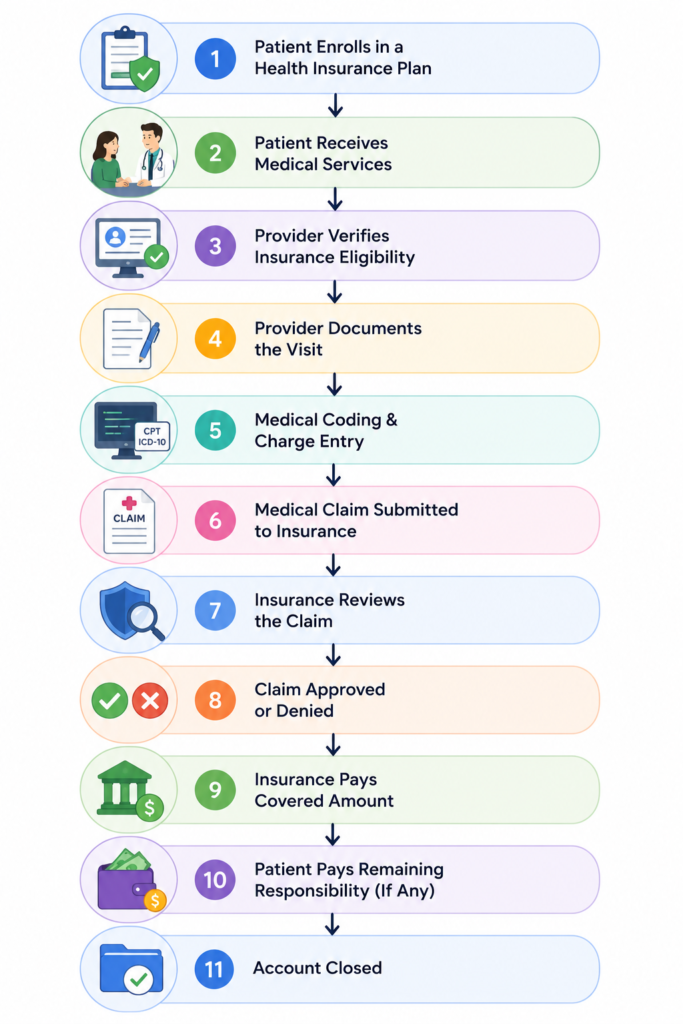
Patient Journey with Health Insurance
Every patient follows a similar journey when using health insurance. From enrolling in a health plan to receiving medical care and paying any remaining balance, each step plays an important role in the medical billing process. Understanding this journey helps medical billing professionals verify coverage, submit accurate claims, and ensure timely reimbursement.
1. Enroll in a Health Insurance Plan
2. Schedule a Medical Appointment
3. Verify Insurance Eligibility
4. Receive Healthcare Services
5. Provider Documents the Visit
6. Medical Claim Submitted to Insurance
7. Insurance Reviews the Claim
8. Insurance Pays Covered Amount
9. Patient Pays Remaining Responsibility (If Any)
10. Account Closed
Keep Learning
Congratulations! You now understand the fundamentals of Health Insurance and how insurance coverage affects medical billing, claim processing, reimbursement, and patient responsibility. In the next module, you’ll learn about the Types of Health Insurance, including Medicare, Medicaid, Commercial Insurance, TRICARE, Workers’ Compensation, and other health plans commonly encountered in medical billing.
Questions, answered
Have questions about the US healthcare system? Find clear, beginner-friendly answers to some of the most common questions to strengthen your understanding before moving on to the next module.
What is health insurance?
Health insurance is an agreement between an individual and an insurance company that helps pay for covered medical expenses in exchange for a premium. Depending on the plan, patients may also pay deductibles, copayments, or coinsurance.
Why is health insurance important in medical billing?
Health insurance determines patient eligibility, covered services, reimbursement amounts, and patient financial responsibility. Medical billing professionals use this information to submit accurate claims and receive proper payment.
What is the difference between a premium and a deductible?
A premium is the amount paid to keep a health insurance policy active, while a deductible is the amount the patient must pay for covered services before the insurance plan begins paying its share.
What is the difference between a copayment and coinsurance?
A copayment (copay) is a fixed amount paid for a covered healthcare service, while coinsurance is a percentage of the allowed amount that the patient pays after meeting the deductible.
What is an Explanation of Benefits (EOB)?
An Explanation of Benefits (EOB) is a statement from the insurance company that explains how a medical claim was processed, including the amount paid, denied, adjusted, and any patient responsibility.