Skip to content

The US Healthcare System is one of the largest, most advanced, and most complex healthcare systems in the world. Every day, millions of people receive medical care through hospitals, physician offices, urgent care centers, specialty clinics, laboratories, imaging centers, pharmacies, rehabilitation facilities, and home healthcare agencies. These organizations work together to improve patient health, diagnose illnesses, provide treatment, and promote overall well-being.

Unlike many countries that have a single government-funded healthcare system, the United States follows a mixed healthcare model. This means healthcare services are paid for through a combination of government programsprivate health insuranceemployer-sponsored insurance, and patient payments. Because of this structure, understanding how the US Healthcare System works is essential for anyone interested in Medical BillingMedical CodingRevenue Cycle Management (RCM)Healthcare Administration, or Accounts Receivable (AR).

Whether you are a student, a beginner, or an experienced healthcare professional, learning about the US Healthcare System provides the foundation for understanding how healthcare organizations operate and how medical services are financed and reimbursed.

What Is the US Healthcare System?

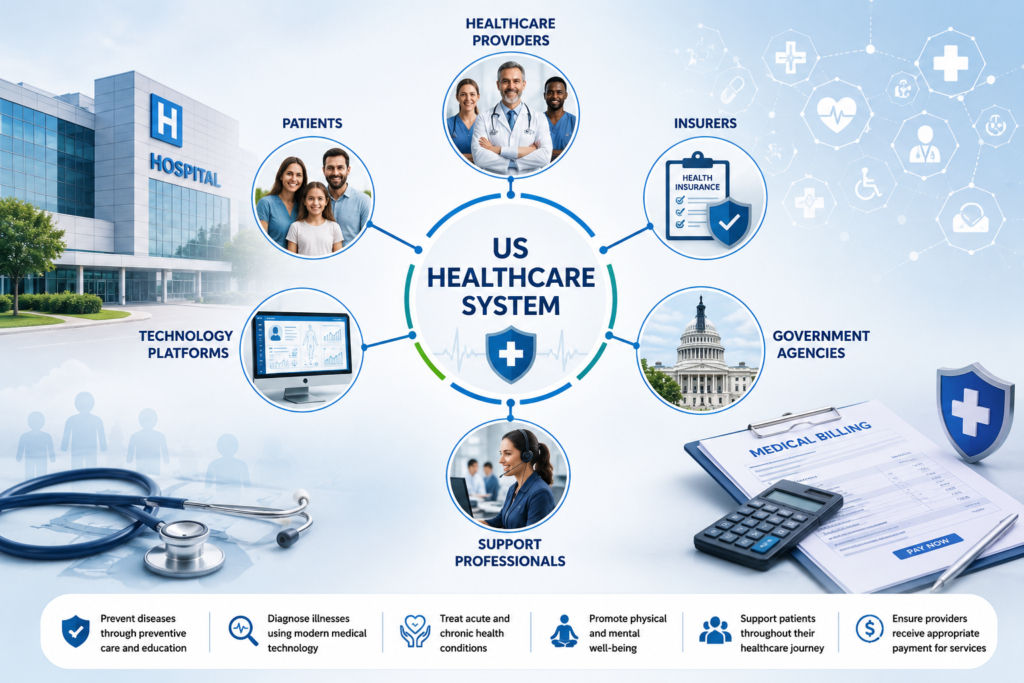
The US Healthcare System is a network of healthcare providers, insurance companies, government agencies, technology platforms, and healthcare support professionals who work together to deliver medical care and manage healthcare payments.

Its primary purpose is to:

  • Prevent diseases through preventive care and health education.
  • Diagnose illnesses using modern medical technology.
  • Treat acute and chronic health conditions.
  • Promote physical and mental well-being.
  • Support patients throughout their healthcare journey.
  • Ensure healthcare providers receive appropriate payment for the services they provide.

The healthcare system is not made up of hospitals alone. It includes thousands of organizations and professionals working together to provide safe, effective, and high-quality healthcare services.


Why Is the US Healthcare System Important?

Healthcare is one of the most important industries in the United States. Millions of patients depend on it every day for routine check-ups, emergency care, surgeries, vaccinations, maternity care, mental health services, rehabilitation, and long-term treatment.

The healthcare system also supports millions of jobs, including:

  • Physicians
  • Nurses
  • Pharmacists
  • Therapists
  • Medical Billers
  • Medical Coders
  • AR Callers
  • Eligibility Verification Specialists
  • Prior Authorization Specialists
  • Revenue Cycle Managers
  • Healthcare Virtual Assistants
  • Practice Managers

Without an organized healthcare system, patients would struggle to access care, providers would have difficulty delivering services, and insurance companies would be unable to process claims efficiently.


Goals of the US Healthcare System

The US Healthcare System is designed to achieve several important goals:

1. Improve Patient Health

The primary goal of healthcare is to help people live healthier lives by preventing illness, diagnosing diseases early, and providing effective treatment.

2. Deliver Quality Medical Care

Healthcare providers work to deliver safe, evidence-based, and patient-centered care while maintaining high clinical standards.

3. Increase Access to Healthcare

Healthcare organizations aim to provide medical services to individuals across different age groups, communities, and health conditions.

4. Promote Preventive Care

Preventive healthcare includes annual check-ups, vaccinations, health screenings, and lifestyle counseling that help reduce the risk of serious diseases.

5. Ensure Financial Sustainability

Healthcare organizations must receive timely reimbursement for the services they provide. This is where Medical Billingand Revenue Cycle Management (RCM) become essential.


Major Components of the US Healthcare System

The healthcare system functions because many different organizations and professionals work together.

Patients

Patients are the center of the healthcare system. They seek healthcare services for preventive care, illnesses, injuries, chronic disease management, or emergency treatment.

Healthcare Providers

Healthcare providers include physicians, specialists, nurse practitioners, physician assistants, therapists, psychologists, dentists, and other licensed professionals who diagnose and treat patients.

Healthcare Facilities

Medical services are delivered through:

  • Hospitals
  • Physician offices
  • Specialty clinics
  • Urgent care centers
  • Ambulatory surgery centers
  • Imaging centers
  • Laboratories
  • Rehabilitation centers
  • Skilled nursing facilities
  • Home healthcare agencies

Each facility plays a unique role in patient care.

Insurance Companies

Insurance companies help patients pay for healthcare services by reviewing medical claims, verifying benefits, determining coverage, and reimbursing healthcare providers according to policy terms.

Insurance companies may be government-sponsored or privately managed, depending on the patient’s health plan.

Government Agencies

Federal and state agencies establish healthcare regulations, oversee public insurance programs, monitor quality standards, and protect patient rights.

Programs such as Medicare and Medicaid are administered under government oversight and play a significant role in the US Healthcare System.

Revenue Cycle Management Teams

Revenue Cycle Management professionals ensure that healthcare providers receive accurate payment for the services they deliver.

These professionals include:

  • Medical Billers
  • Medical Coders
  • AR Callers
  • Payment Posting Specialists
  • Denial Management Specialists
  • Eligibility Verification Teams
  • Prior Authorization Teams
  • Revenue Cycle Analysts

Their work helps maintain the financial health of healthcare organizations while supporting compliance with billing and insurance requirements.


Why Should Medical Billing Professionals Learn the US Healthcare System?

Many people think Medical Billing starts when a claim is submitted. In reality, it begins much earlier.

For example, if patient registration is completed incorrectly, the claim may later be denied because of inaccurate demographic information or inactive insurance coverage. Similarly, if prior authorization is not obtained before certain services are performed, the insurance company may deny payment even if the medical treatment was appropriate.

Understanding the entire US Healthcare System allows Medical Billers and AR Callers to identify the root cause of billing problems instead of only correcting the final claim.

This knowledge also improves communication with healthcare providers, insurance representatives, and patients.


Real-World Example

Imagine that John visits a Primary Care Physician because he has been experiencing chest pain.

The front desk staff register the patient and collect insurance information. An eligibility specialist verifies that John’s insurance is active. The physician evaluates John and orders diagnostic tests. After the visit, the provider documents the services performed.

A Medical Coder reviews the documentation and assigns appropriate diagnosis and procedure codes. A Medical Biller prepares and submits the claim to the insurance company. The insurance company reviews the claim and either approves payment or issues a denial if additional information or corrections are needed. If the claim is denied, an AR Caller investigates the reason, contacts the insurance company if necessary, and works toward claim resolution.

This example demonstrates how multiple healthcare professionals work together to ensure both quality patient care and accurate reimbursement.

Types of Healthcare Services in the United States

The US Healthcare System offers a wide range of medical services to meet the health needs of different patients. Healthcare is not limited to hospitals or emergency treatment. It includes services that help people stay healthy, recover from illness, and manage long-term medical conditions.

Preventive Care

Preventive care focuses on preventing diseases before they occur. It helps people maintain good health through regular check-ups, vaccinations, health screenings, and lifestyle counseling.

Common preventive services include:

  • Annual wellness visits
  • Routine physical examinations
  • Blood pressure screening
  • Cholesterol testing
  • Cancer screenings
  • Childhood and adult vaccinations
  • Diabetes screening

Preventive care can reduce healthcare costs by identifying health problems early.

Primary Care

Primary care is usually the first point of contact for patients. A Primary Care Physician (PCP) manages routine healthcare, treats common illnesses, provides preventive services, and coordinates referrals to specialists when necessary.

Specialty Care

Specialists diagnose and treat specific medical conditions. Examples include:

  • Cardiologists
  • Orthopedic Surgeons
  • Neurologists
  • Dermatologists
  • Gastroenterologists
  • Pulmonologists
  • Endocrinologists
  • Oncologists

Patients may need a referral from their primary care provider depending on their insurance plan.

Emergency Care

Emergency departments provide immediate treatment for life-threatening conditions such as heart attacks, strokes, severe injuries, breathing difficulties, and major accidents.

Urgent Care

Urgent care centers treat illnesses and injuries that require prompt attention but are not medical emergencies. They often provide care during evenings and weekends.

Diagnostic Services

Healthcare providers use diagnostic tests to identify diseases and monitor treatment progress.

Examples include:

  • Blood tests
  • X-rays
  • CT scans
  • MRI scans
  • Ultrasounds
  • Electrocardiograms (ECG/EKG)

Rehabilitation Services

Rehabilitation helps patients recover after surgery, illness, or injury.

Services include:

  • Physical therapy
  • Occupational therapy
  • Speech therapy
  • Cardiac rehabilitation

Home Healthcare

Some patients receive medical care in their homes, especially older adults or individuals recovering from surgery.


Public vs. Private Healthcare

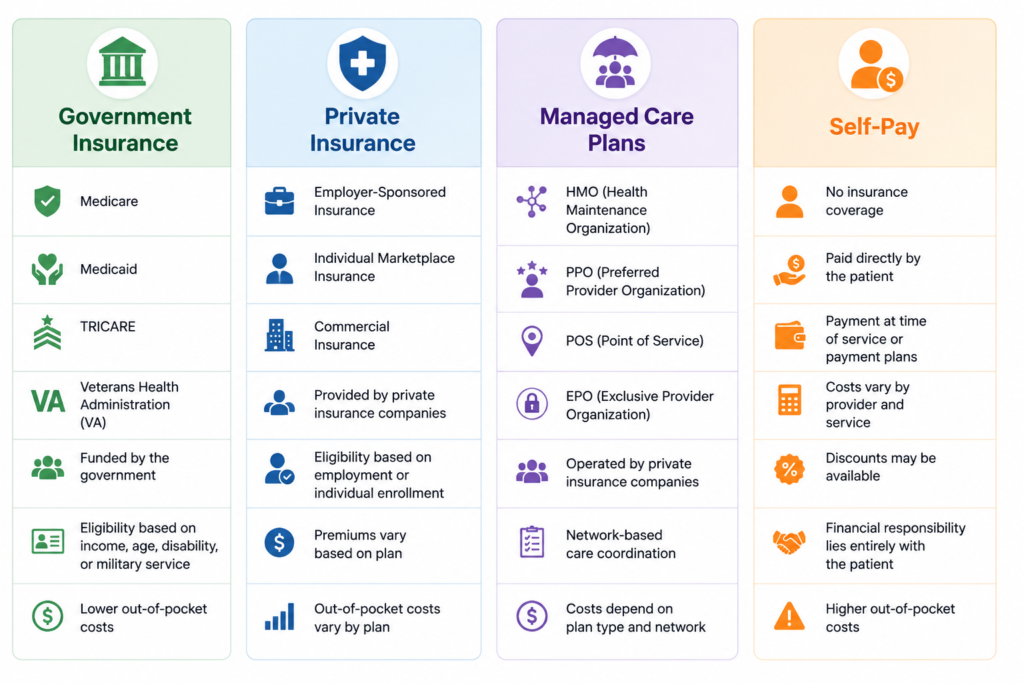
One of the unique features of the US Healthcare System is its combination of public and private healthcare programs.

Public Healthcare

Public healthcare programs are funded or administered by the government and help eligible individuals receive healthcare coverage.

Examples include:

  • Medicare
  • Medicaid
  • Children’s Health Insurance Program (CHIP)
  • Veterans Health Administration (VA)
  • TRICARE

Each program has its own eligibility rules and benefits.

Private Healthcare

Private healthcare includes insurance plans purchased by individuals or provided through employers.

Private insurance companies negotiate contracts with healthcare providers and determine coverage according to the patient’s policy.

Many Americans receive private health insurance through their employer.


How Healthcare Is Paid For

Healthcare services are expensive, and several parties may contribute to the cost of care.

Common payment sources include:

  • Employer-sponsored health insurance
  • Individual health insurance plans
  • Medicare
  • Medicaid
  • Patient copayments
  • Coinsurance
  • Deductibles
  • Out-of-pocket payments

Healthcare providers submit claims to insurance companies to request payment for covered medical services. This process is an important part of Medical Billing and Revenue Cycle Management (RCM).


Why Revenue Cycle Management (RCM) Matters

Revenue Cycle Management is the financial process that helps healthcare providers receive payment for the services they provide.

The Revenue Cycle begins when a patient schedules an appointment and ends when all payments have been collected.

Major steps include:

  1. Patient Registration
  2. Insurance Eligibility Verification
  3. Prior Authorization
  4. Medical Documentation
  5. Medical Coding
  6. Claim Submission
  7. Insurance Claim Processing
  8. Payment Posting
  9. Accounts Receivable Follow-up
  10. Denial Management
  11. Appeals
  12. Patient Billing

Every step affects the financial success of a healthcare organization.


Why Medical Billing Is Important

Medical Billing connects patient care with insurance reimbursement.

Medical Billers ensure that:

  • Patient information is accurate.
  • Insurance information is verified.
  • Claims are submitted correctly.
  • Insurance payments are received.
  • Denials are investigated.
  • Appeals are submitted when appropriate.

Accurate Medical Billing helps healthcare providers maintain financial stability while reducing claim denials and payment delays.


Why Medical Coding Is Important

Medical Coding converts medical documentation into standardized diagnosis and procedure codes used for billing, reporting, and reimbursement.

Accurate coding supports:

  • Proper claim submission
  • Insurance reimbursement
  • Healthcare reporting
  • Quality measurement
  • Regulatory compliance

Medical Coding and Medical Billing work together throughout the Revenue Cycle.


Career Opportunities in the US Healthcare Industry

The healthcare industry offers excellent career opportunities for professionals with Medical Billing and Revenue Cycle Management knowledge.

Popular career options include:

  • Medical Biller
  • Medical Coder
  • Accounts Receivable (AR) Caller
  • Eligibility Verification Specialist
  • Prior Authorization Specialist
  • Payment Posting Specialist
  • Denial Management Specialist
  • Practice Manager
  • Revenue Cycle Analyst
  • Healthcare Virtual Assistant

As healthcare services continue to grow, skilled professionals remain in demand across hospitals, physician practices, medical billing companies, and healthcare business process outsourcing (BPO) organizations.


Key Takeaways

  • The US Healthcare System combines government programs, private insurance, healthcare providers, and administrative professionals to deliver patient care.
  • Medical Billing, Medical Coding, and Revenue Cycle Management play a vital role in ensuring healthcare providers receive appropriate reimbursement.
  • Healthcare involves many participants, including patients, providers, insurance companies, government agencies, and Revenue Cycle Management professionals.
  • Understanding the healthcare system helps Medical Billers, AR Callers, and Coders investigate claims more effectively and reduce denials.
  • A strong understanding of the US Healthcare System is the foundation for learning advanced topics such as Medicare, Medicaid, Prior Authorization, Medical Coding, Claim Submission, Payment Posting, and Denial Management.

Frequently Asked Questions

What is the US Healthcare System?

The US Healthcare System is a network of healthcare providers, insurance companies, government agencies, and healthcare professionals that work together to deliver medical care and manage healthcare payments.

Why is learning the US Healthcare System important for Medical Billing?

Understanding the healthcare system helps Medical Billers identify claim issues, communicate with insurance companies, reduce denials, and improve reimbursement accuracy.

What is Revenue Cycle Management?

Revenue Cycle Management (RCM) is the complete financial process that begins with patient registration and ends when healthcare providers receive full payment for their services.

What is the difference between Medical Billing and Medical Coding?

Medical Coding converts medical documentation into standardized codes, while Medical Billing uses those codes to prepare and submit claims for reimbursement.

Who can benefit from learning the US Healthcare System?

Students, Medical Billers, Medical Coders, AR Callers, Healthcare Virtual Assistants, Providers, Practice Managers, and Revenue Cycle Management professionals can all benefit from understanding how the system works.


Conclusion

The US Healthcare System is much more than hospitals and doctors. It is a highly coordinated network of healthcare providers, insurance companies, government agencies, and administrative professionals working together to deliver quality patient care and ensure appropriate reimbursement.

For anyone pursuing a career in US Medical BillingMedical CodingRevenue Cycle Management (RCM)AR CallingEligibility VerificationPrior Authorization, or Healthcare Administration, learning the US Healthcare System is the first step toward professional success.

A strong understanding of how healthcare services are delivered, financed, documented, coded, billed, and reimbursed provides the knowledge needed to solve billing challenges, reduce claim denials, improve reimbursement, and contribute to the financial health of healthcare organizations.

In the next module, you will explore Medical Billing Overview, where you’ll learn how healthcare claims are created, submitted, processed, and reimbursed through the Revenue Cycle.