
When I started my career in US Medical Billing as an AR Caller, I initially thought medical billing was simply about submitting insurance claims. However, after working directly with insurance companies and following up on unpaid claims every day, I realized that medical billing is much more than that.
Written by Manoj, AR Caller with experience in US medical billing and Revenue Cycle Management.
I’ve seen claims denied because of small registration mistakes, missing prior authorizations, incorrect insurance information, or coding-related issues. I’ve also experienced how proper follow-up and understanding payer guidelines can turn a denied claim into a paid claim. These experiences taught me that medical billing is one of the most important parts of the healthcare revenue cycle.
Through Learn Medical Billing, my goal is to make medical billing education practical and easy to understand. Instead of relying only on textbook definitions, I want to explain how the process works in real healthcare settings so beginners can build confidence and understand the responsibilities of medical billing professionals.
In this guide, I’ll explain what medical billing is, why it matters, how the billing process works, and what skills are needed to succeed in this field.
What Is Medical Billing?
Medical billing is the process of preparing, submitting, tracking, and following up on insurance claims so healthcare providers receive payment for the medical services they provide.
Every time a patient visits a physician, hospital, laboratory, or other healthcare provider, the services performed must be documented, coded, billed, and reimbursed correctly. Medical billing connects healthcare providers, insurance companies, and patients throughout this reimbursement process.
In simple terms, medical billing helps ensure that healthcare providers are paid accurately and on time for the care they deliver.
Medical billing professionals work with:
- Healthcare providers
- Medical coders
- Insurance companies
- Patients
- Clearinghouses
to make sure claims are submitted correctly and payments are processed efficiently.
Medical Billing Definition
Medical billing is the administrative and financial process of converting healthcare services into insurance claims, submitting those claims to insurance companies, monitoring their progress, posting payments, and resolving claim issues until the provider receives appropriate reimbursement.
Medical billing is one of the core components of Revenue Cycle Management (RCM) because it directly influences a healthcare organization’s financial performance.
Without effective medical billing, providers may experience:
Reduced revenue
Delayed payments
Increased claim denials
Higher accounts receivable
Cash flow problems
Why Is Medical Billing Important?
Medical billing is much more than preparing insurance claims. It ensures healthcare organizations receive timely reimbursement while helping patients understand their financial responsibilities.
An efficient billing process provides several benefits.
1. Supports Healthcare Revenue
Hospitals and medical practices depend on accurate billing to receive payment for the services they provide.
2. Reduces Claim Denials
Proper billing practices help minimize denials caused by:
- Missing information
- Incorrect insurance details
- Coding errors
- Authorization issues
3. Improves Cash Flow
Timely claim submission and consistent follow-up reduce payment delays and improve overall financial performance.
4. Enhances Patient Experience
Accurate billing allows patients to receive clear statements regarding:
- Deductibles
- Copayments
- Coinsurance
- Remaining balances
5. Maintains Compliance
Medical billing professionals must follow payer guidelines, government regulations, and healthcare billing requirements to reduce compliance risks.
Where Medical Billing Fits in Revenue Cycle Management
Medical billing is one part of the larger Revenue Cycle Management (RCM) process.
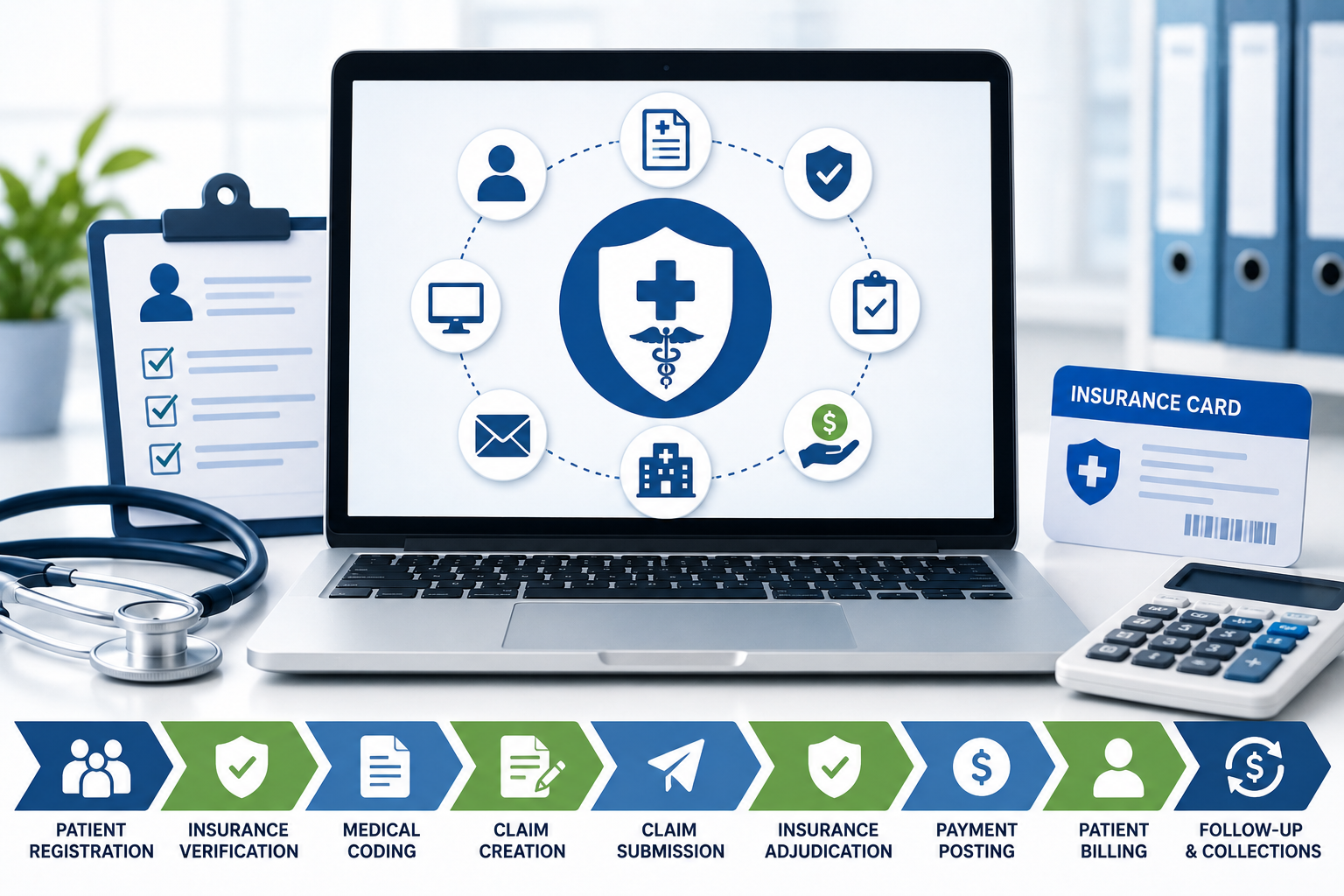
A simplified workflow looks like this:
- Patient Registration
- Insurance Verification
- Prior Authorization
- Medical Coding
- Charge Entry
- Claim Submission
- Insurance Adjudication
- Payment Posting
- Patient Billing
- AR Follow-Up and Denial Management
Every step affects whether the provider ultimately receives payment..ling professionals ensure these claims meet payer requirements so providers can receive reimbursement.
How Does the Medical Billing Process Work?
Understanding the medical billing process helps explain how providers receive payment for patient care.
1. Patient Registration
The process begins when a patient schedules an appointment.
The healthcare facility collects:
- Patient demographics
- Insurance information
- Contact details
- Government-issued identification
Accurate registration is essential because incorrect patient information can result in claim rejections before the claim is even processed.
2. Insurance Verification
Before treatment, staff verify the patient’s insurance coverage.
This includes checking:
- Eligibility
- Deductibles
- Copayments
- Coinsurance
- Prior authorization requirements
- Network participation
Insurance verification helps reduce avoidable claim denials.
3. Medical Coding
After treatment, certified medical coders review the clinical documentation and assign standardized codes.
Common coding systems include:
- ICD-10-CM (Diagnosis Codes)
- CPT (Procedure Codes)
- HCPCS Level II (Supplies and Services)
These codes describe exactly what services were provided.
4. Claim Creation
Medical billers prepare the insurance claim using:
- Patient information
- Provider information
- Diagnosis codes
- Procedure codes
- Charges
- Insurance details
Every field must be accurate before submission.
5. Claim Submission
Claims are electronically submitted through a clearinghouse to the insurance payer.
The payer reviews:
- Member eligibility
- Coverage
- Coding accuracy
- Medical necessity
- Policy guidelines
6. Insurance Adjudication
The insurance company reviews the claim and determines whether payment should be made.
Possible outcomes include:
- Approved
- Partially Paid
- Denied
- Rejected
If issues are identified, corrections or appeals may be required.
7. Payment Posting
After payment is received, the medical billing team posts:
- Insurance payment
- Patient responsibility
- Contractual adjustments
- Write-offs (where applicable)
Accurate payment posting keeps patient accounts up to date.
8. Patient Billing
If insurance does not cover the full balance, the remaining amount may become the patient’s responsibility.
Examples include:
- Deductibles
- Copayments
- Coinsurance
- Non-covered services
Patients then receive a statement for the outstanding balance.
9. Follow-Up and Collections
Outstanding claims require follow-up with insurance companies or patients.
This may involve:
- Correcting rejected claims
- Appealing denied claims
- Resubmitting corrected claims
- Requesting reconsideration
- Setting up patient payment plans
Consistent follow-up helps reduce aging accounts receivable and improve collections.
Medical Billing vs Medical Coding
Many people confuse medical billing and medical coding, but they are two different yet closely connected functions.
Medical coding involves reviewing patient records and assigning standardized diagnosis and procedure codes using systems like ICD-10, CPT, and HCPCS. Medical billing uses those codes to prepare insurance claims, submit them to payers, track claim status, and collect payments.
Both professionals work together to ensure healthcare providers are reimbursed accurately and efficiently.
| Medical Coding | Medical Billing |
|---|---|
| Converts medical records into standardized codes | Uses coded information to submit insurance claims |
| Focuses on documentation accuracy | Focuses on payment processing |
| Assigns ICD-10, CPT, and HCPCS codes | Communicates with insurance companies |
| Works before claim submission | Works throughout the reimbursement process |
Both roles are essential for successful healthcare revenue management.
Skills Required for Medical Billing
Successful medical billers need a combination of technical knowledge and administrative skills.
Important skills include:
- Knowledge of medical terminology
- Insurance claim processing
- Understanding CPT and ICD coding basics
- Attention to detail
- Communication skills
- Problem-solving abilities
- Familiarity with billing software
- Organizational skills
As healthcare regulations continue to evolve, ongoing learning is also important.
Who Uses Medical Billing?
Medical billing is used across nearly every type of healthcare organization, including:
- Hospitals
- Physician practices
- Dental clinics
- Physical therapy centers
- Mental health clinics
- Urgent care centers
- Diagnostic laboratories
- Imaging centers
- Specialty healthcare practices
Conclusion
Understanding what is medical billing is the first step toward appreciating how healthcare providers receive payment for the care they deliver. Medical billing connects patient services, insurance companies, and healthcare organizations through an organized reimbursement process that supports financial stability.
As healthcare continues to become more technology-driven, the demand for skilled billing professionals and efficient billing systems will continue to grow. Whether you’re exploring a career in healthcare administration or managing a medical practice, learning medical billing provides valuable insight into one of the most important aspects of the healthcare industry.
By understanding the medical billing process, common challenges, and modern technologies involved, healthcare organizations can improve revenue, reduce claim denials, and provide a better financial experience for patients.
FAQs
1. What is the medical billing definition?
Medical billing is the process of preparing, submitting, and managing insurance claims so healthcare providers receive payment for the medical services they provide.
2. Is medical billing and medical coding the same?
No. Medical coding converts medical documentation into standardized codes, while medical billing uses those codes to submit insurance claims and collect payment.
3. Why is medical billing important?
Medical billing ensures healthcare providers are paid accurately and on time while reducing claim denials and improving revenue cycle management.
4. Who uses medical billing?
Medical billing is used by hospitals, physician offices, specialty clinics, laboratories, dental practices, and other healthcare providers to manage insurance claims and patient payments.
5. Can medical billing be automated?
Yes. Modern medical billing software and AI-powered tools automate claim submission, error detection, payment posting, and denial management, making the process faster and more accurate.
Pingback: Medical Billing Process Explained Step by Step